



In a world where minimalist design has dominated for years, the pendulum is swinging back toward a more expressive, opulent, and historical aesthetic. As we move through 2026, many of you are seeking more than just functionality; you are seeking a sense of grandeur, history, and timeless elegance within your living spaces. The “Palace-Style” home is not about living in a museum, but rather about integrating the sophisticated architectural details, rich textures, and majestic scales of royal residences into a contemporary lifestyle.
When you walk into a space inspired by European palaces or Eastern royal courts, there is an immediate shift in atmosphere. The air feels heavier with significance, and the eyes are constantly met with intricate beauty. Achieving this look requires a disciplined approach to layers, materials, and lighting. We have observed that the most successful palace-inspired homes today aren’t those that replicate the past exactly, but those that adapt classical principles to fit modern comforts.
The desire for this “New Royalism” stems from a collective need for stability and luxury. In my experience, clients are increasingly asking for rooms that tell a story—rooms that feel curated over generations rather than purchased from a catalog in a single afternoon. This transition involves understanding the balance between “more is more” and “everything in its place.” Through this guide, we will walk you through the essential steps to elevate your home from a standard dwelling to a majestic sanctuary.
Whether you live in a sprawling suburban estate or a compact city apartment, these principles can be scaled to fit your environment. It is about the quality of the finish, the intentionality of the furniture placement, and the confidence to embrace high-drama design elements. By the time you finish this guide, you will have a comprehensive blueprint for infusing your home with the regal charm and sophisticated opulence of a modern-day palace.
Table of Contents
ToggleStep 1: Establishing the Architectural Foundation
The secret to a palace-style home lies not in the furniture, but in the walls and ceilings. You must think of your room as a canvas that requires structural depth. Without architectural interest, even the most expensive sofa will look out of place. We recommend starting with crown molding and wainscoting. In the grand palaces of Versailles or St. Petersburg, the walls are never flat; they are divided into panels that guide the eye upward.
Applying “picture frame” molding is one of the most cost-effective ways to create an immediate sense of luxury. When you install these thin strips of wood or high-quality polyurethane in rectangular patterns on your walls, you create a rhythmic texture that mimics the grand salons of the 18th century. For a truly 2026 approach, consider painting the molding and the wall in the same color, but using a higher gloss for the trim to create a subtle, sophisticated contrast.
Ceilings are often the “forgotten fifth wall,” but in palace design, they are a primary focus. Ceiling medallions are a must-have for any room where you plan to hang a chandelier. Furthermore, if your budget allows, coffered ceilings or tray ceilings with gold-leaf accents can transform a standard room into a masterpiece of volume and shadow.
| Element | Recommended Material | Impact on Space |
|---|---|---|
| Crown Molding | Plaster or High-Density Polyurethane | Increases perceived height and elegance |
| Wainscoting | Solid Wood or MDF | Adds weight and classical structure to the lower wall |
| Ceiling Medallions | Ornate Resin | Draws attention to lighting and adds focal points |
Step 2: Mastering the Grand Color Palette
Color in a palace-style home should be deep, resonant, and unapologetically rich. Gone are the days of sterile greys; in 2026, we are seeing a resurgence of jewel tones that provide a backdrop for metallic accents. You should look toward deep emerald greens, sapphire blues, and rich burgundies. These colors create a sense of intimacy and “envelopment” that is characteristic of royal chambers.
However, the key to success is balance. If you choose a dark color for the walls, we suggest balancing it with light-colored flooring or ivory upholstery. Gold is the quintessential “royal” metal, but it must be used with a gentle hand. Brass and antique gold finishes are generally more sophisticated than bright, reflective yellows. When you apply gold leaf to the edges of your molding or the legs of a console table, it catches the ambient light and creates a warm glow that elevates the entire room.
Neutral palettes are also possible in palace design, provided you focus on texture. A room bathed in shades of cream, champagne, and pearl can feel just as regal as a red velvet parlor, provided there are enough layers of silk, brocade, and marble to provide visual weight. In my experience, using a monochromatic ivory palette requires even more attention to detail in the carvings and fabric patterns to ensure the room does not feel flat.
Step 3: Selecting Statement Furniture with History
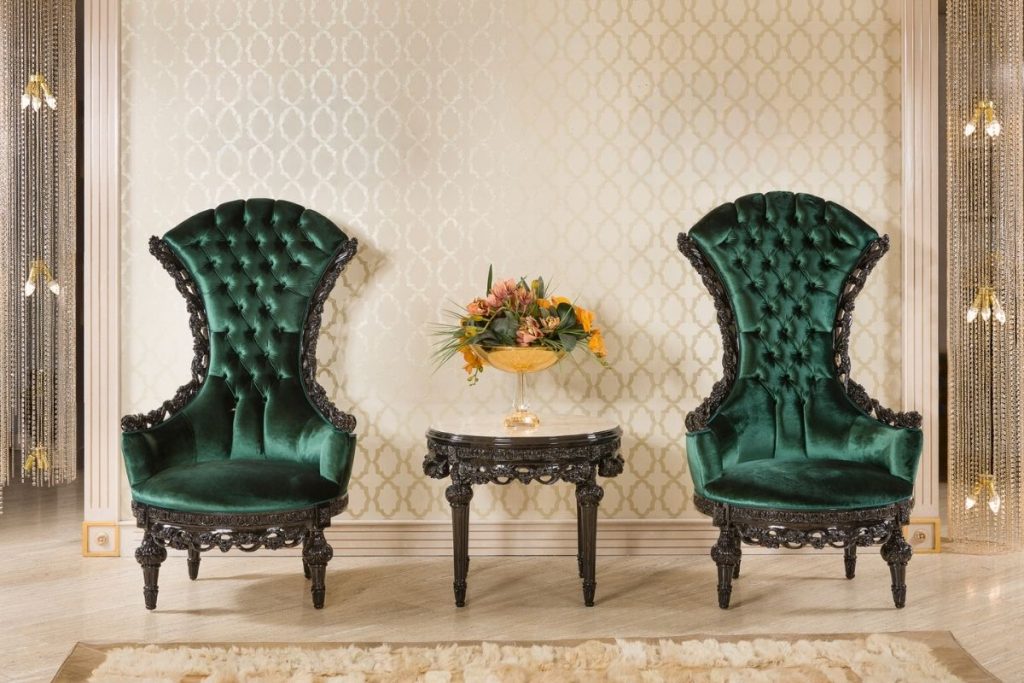
Furniture in a palace-inspired home should never look “temporary.” You want pieces that feel heavy, solid, and expertly crafted. This is the time to embrace the curves of the Baroque and Rococo periods or the structured elegance of the Neoclassical era. When you are shopping for furniture, look for cabriole legs, hand-carved wood details, and tufted upholstery.
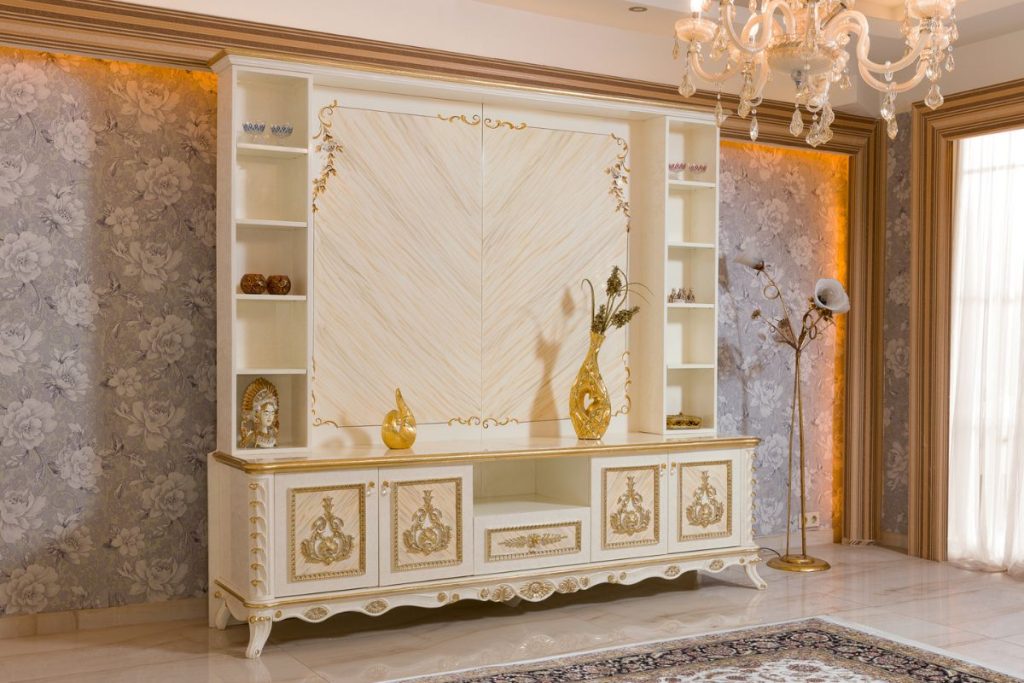
A common mistake is filling a room with too many small pieces. For a regal look, scale is your friend. One large, ornate armoire is far more effective than three small bookshelves. We recommend investing in a high-quality “anchor” piece for each room. In the living room, this might be a Chesterfield sofa in crushed velvet; in the entryway, a marble-topped commode with marquetry inlay.
Mixing periods is a hallmark of modern palace style. You do not want your home to look like a period-piece movie set. Instead, pair a classic Louis XIV chair with a sleek, modern glass coffee table. This juxtaposition highlights the beauty of both eras and keeps the home feeling relevant for 2026. Always prioritize comfort alongside aesthetics; a throne-like chair is of little use if it isn’t a pleasant place to sit.
Step 4: Illuminating with Grandeur and Layering
Lighting is the “jewelry” of your home. In a palace-style interior, lighting serves two purposes: it provides a warm, flattering glow and acts as a central sculptural element. The chandelier is the undisputed king of palace lighting. For a contemporary touch, we are seeing many designers opt for oversized crystal chandeliers with streamlined silhouettes or those that incorporate matte black frames with traditional cascading prisms.
Beyond the central fixture, you must layer your lighting. Wall sconces are essential for creating that “mansion” feel. When you place sconces on either side of a large mirror or a piece of art, you create a formal symmetry that is inherently royal. In my observations, the most luxurious homes avoid harsh overhead “can” lights, preferring instead the soft, diffused light of lamps with silk shades and flickering candles (or high-quality LED equivalents).
Consider the temperature of your bulbs. To achieve an authentic palace atmosphere, stay within the 2700K to 3000K range. This warm light mimics the candlelight of the past and enhances the richness of gold accents and wood tones. Smart home integration in 2026 allows you to program “scenes” where the lighting dims to a warm amber in the evening, perfectly highlighting the architectural details you’ve worked so hard to install.
| Lighting Type | Placement | Effect |
|---|---|---|
| Crystal Chandelier | Center of Room / Above Table | Acts as a majestic focal point |
| Gilded Sconces | Flanking Art or Mirrors | Provides symmetry and accentuates walls |
| Buffet Lamps | Console Tables / Sideboards | Adds intimate, eye-level warmth |
Step 5: Dressing the Windows and Walls with Opulence
In a royal-inspired interior, windows are not just for light; they are for drama. We recommend using floor-to-ceiling drapery, even if your windows do not reach the ceiling. This “puddling” effect, where the fabric gathers slightly on the floor, conveys a sense of abundance and luxury. Choose heavy fabrics like velvet, damask, or weighted silk. Double-layering your curtains—with a sheer inner layer for privacy and a heavy outer layer for style—is a classic palace technique.
Wall treatments should go beyond simple paint. Tapestries have made a significant comeback in 2026 as a way to add both insulation and historical narrative to a room. A large-scale floral or landscape tapestry can serve as a soft, textured alternative to a traditional painting. If tapestries feel too heavy for your taste, consider Chinoiserie wallpaper. These hand-painted or high-quality printed scenes of nature and pagodas have been a staple of European palaces for centuries.
Do not be afraid of patterns. The “Palace-Style” thrives on the sophisticated clashing of prints. You can pair a striped wallpaper with a floral rug, provided they share a common color thread. This layered approach creates a sense of “inherited wealth” and depth that cannot be replicated with plain walls.
Step 6: Incorporating Fine Art and Sculptural Elements
A palace is a curated collection of beauty, and your home should reflect that same passion for the arts. This does not mean you need to own original Renaissance masterpieces, but you should choose your art with an eye for classical subjects. Portraiture, landscapes, and architectural sketches in ornate gold frames instantly elevate a room’s pedigree.
In my experience, many homeowners focus solely on 2D art, forgetting that 3D elements are what truly create a “palatial” feel. Pedestals holding marble busts or bronze sculptures add a level of sophistication that a simple vase cannot achieve. Placing a bust in a corner or at the end of a hallway creates a “sightline” that draws people through the home, much like a gallery in a royal residence.
Gallery walls are also a fantastic tool, but for a palace style, they should be symmetrical. Instead of an eclectic mix of frames, use identical frames for a series of botanical prints or sketches. This creates a sense of order and formality that is essential to the look. Remember, in palace design, the frame is often just as important as the art itself—look for deep profiles and intricate carvings.
Step 7: Creating Opulent Flooring with Enduring Materials
The foundation you walk on sets the tone for the entire home. In the world’s most famous palaces, floors are often works of art themselves. Marble is the gold standard. Whether you choose classic white Carrara or a more dramatic green Malachite-inspired marble, the stone’s cold, smooth surface is the height of luxury. For 2026, large-format marble tiles with minimal grout lines are being used to create a seamless, expansive look.
If stone feels too cold for your climate, wood flooring in a parquet pattern is an excellent alternative. The “Versailles” pattern or a classic “Herringbone” provides a rhythmic complexity that straight planks simply cannot match. We recommend a medium-to-dark stain to provide a grounded feeling to the room.
Rugs are the final layer of flooring opulence. A palace-style room is rarely complete without a large-scale Persian or Oriental rug. These rugs act as the “soul” of the room, bringing in intricate patterns and historical weight. Ensure the rug is large enough; in a royal setting, the rug should usually extend under all the main pieces of furniture in a seating group, rather than floating like a small island in the center of the room.
| Floor Material | Style | Best Use |
|---|---|---|
| Polished Marble | Checkerboard or Inlay | Grand Foyers and Bathrooms |
| Hardwood | Herringbone / Versailles Pattern | Living Rooms and Libraries |
| Wool Rugs | Persian or Aubisson Style | Under Dining Tables and Seating Groups |
Step 8: Designing a Royal Master Suite for Rest
The bedroom should be your most private “inner sanctum,” designed for total indulgence. The centerpiece of any palace-style bedroom is the bed. We strongly recommend a four-poster bed or a canopy bed with lush draping. This “room within a room” creates a sense of security and grand scale. Use a high-quality upholstered headboard in velvet or silk to add a layer of softness against the hard lines of the bed frame.
Bedding should be layered with precision. Start with high-thread-count cotton or silk sheets, add a heavy duvet, and finish with a decorative coverlet and a collection of bolster and throw pillows. In my experience, the use of different textures—such as a faux-fur throw over a silk bedspread—adds a modern tactile dimension that feels very current for 2026.
Don’t forget the peripheral furniture. A “bench at the end of the bed” (a bed-end ottoman) in a matching fabric provides a practical place for dressing and adds to the formal layout. A dedicated dressing table or vanity with a tri-fold mirror is another essential element for the royal suite, offering a dedicated space for self-care that feels far removed from the rush of everyday life.
Step 9: Elevating Kitchens and Dining Rooms for Entertaining
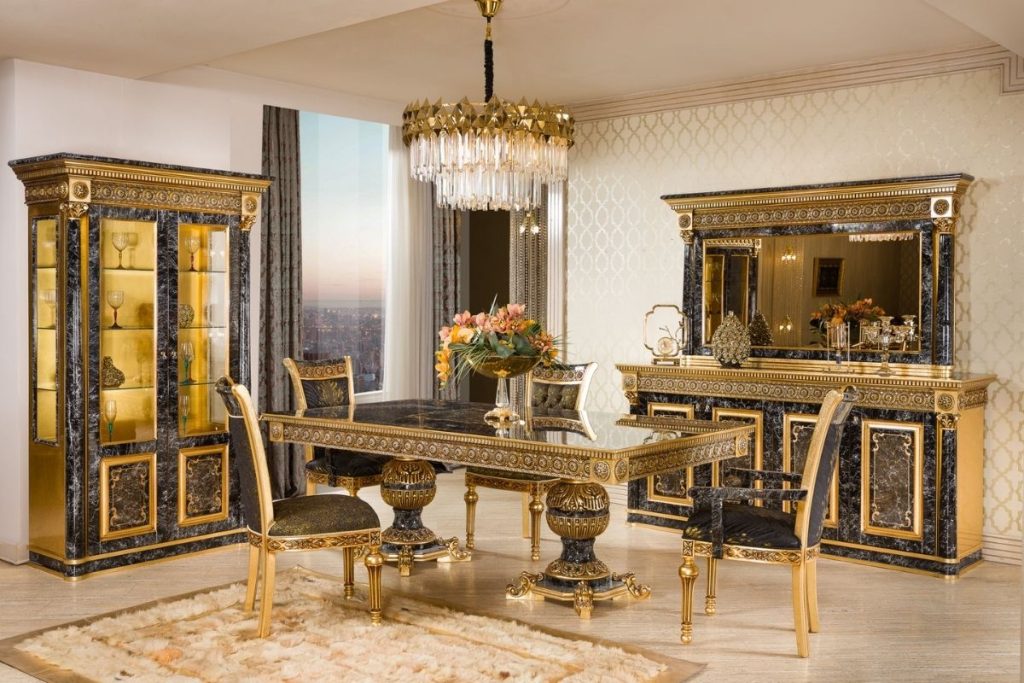
In a palace-style home, the dining room is the stage for social life. The table should be grand, ideally made of dark wood with carved legs. Surround it with chairs that are fully upholstered, rather than simple wooden ones, to encourage long, comfortable dinners. A large sideboard or buffet is essential for displaying fine china and silver, serving as both a functional piece and a display of the household’s “treasures.”
The kitchen in 2026 is moving away from the purely utilitarian “industrial” look and toward a “furnished” aesthetic. To make your kitchen feel like part of a palace, consider using cabinetry that looks like fine furniture. Ornate hardware in polished brass, integrated appliances that are hidden behind wooden panels, and a statement range hood with metallic accents can make the heart of the home feel as regal as the ballroom.
Lighting in the kitchen should also be decorative. Why settle for basic pendants when you can hang mini-chandeliers over your kitchen island? Using marble for both the countertops and the backsplash (a “full-slab” backsplash) creates a clean, high-end look that is both modern and timeless.
Step 10: Curating the Final Flourishes and Sensory Details
The final 5% of decoration is what makes a house feel like a lived-in palace. This involves the “layering of life.” Fresh flowers are a non-negotiable in royal interiors. Large, overflowing arrangements of lilies, roses, or hydrangeas in crystal vases should be placed in the entryway and on the dining table. They add color, life, and a natural fragrance that no artificial scent can match.
Speaking of fragrance, scent is a powerful tool in luxury design. We recommend high-end candles or diffusers with notes of oud, amber, sandalwood, or jasmine. A “signature scent” for your home creates an immediate psychological association with luxury the moment you or your guests cross the threshold.
Finally, display your collections. Whether it is antique books, silver trays, or porcelain figurines, showing off curated items gives the home personality. However, the “palace” way to display is to group items together by color or type to maintain a sense of order. Avoid clutter at all costs; every item should feel like it was placed there with intention. In my experience, the most “regal” homes are those where every object has enough space around it to be appreciated as an individual piece of art.
Key Takeaways for Palace-Style Living
- Architecture First: Focus on moldings and ceiling details before buying furniture.
- Rich Color Palettes: Embrace jewel tones and metallic accents for a sense of depth.
- Scale and Symmetry: Use large-scale pieces and formal, mirrored layouts to create a sense of order.
- Layered Lighting: Move beyond overhead lights; use chandeliers and sconces for a warm glow.
- Tactile Luxury: Incorporate velvet, silk, marble, and fine wood to appeal to the senses.
- Curated Art: Choose classical subjects and high-quality frames to add historical weight.
Frequently Asked Questions
Q: Can I achieve a palace style in a small apartment?
A: Absolutely. While you may not have 20-foot ceilings, you can still use crown molding, rich colors, and high-quality fabrics. In smaller spaces, focus on one or two “hero” pieces, such as an ornate mirror or a beautiful velvet sofa, rather than cluttering the room with many small items.
Q: Is palace style too “stuffy” for a family with children or pets?
A: Not necessarily. In 2026, we have access to incredible performance fabrics that look like silk or velvet but are stain-resistant and durable. You can have the look of luxury without the constant worry of damage. Choose sturdy, heavy furniture that can withstand daily use.
Q: How do I prevent my home from looking like a museum?
A: The key is the “modern mix.” Incorporate contemporary art alongside classical pieces, and ensure your lighting and technology are state-of-the-art. A palace-style home should feel comfortable and functional for today’s lifestyle, not stuck in the 1700s.
Q: Is it expensive to create this look?
A: It can be, but it doesn’t have to be. Many architectural elements like molding are relatively inexpensive materials that just require labor. Shopping at antique auctions or high-end thrift stores can help you find “real” pieces with history for a fraction of the cost of new luxury reproductions.
Q: What is the most important room to start with?
A: We usually recommend starting with the entryway or the living room. These are the “public” spaces that set the tone for the rest of the home. Once you master the style in one room, it becomes easier to carry those design threads throughout the rest of the house.
Q: Does every room need to be “palace-style”?
A: No, you can have a “regal thread” that runs through the house while allowing some rooms to be more relaxed. For example, a grand dining room can coexist with a more modern, streamlined home office, as long as the quality of materials remains consistent.
Conclusion
Creating a palace-style home is a journey into the world of maximalism, history, and uncompromising quality. By focusing on the architectural bones of your house, choosing a palette that evokes emotion, and selecting furniture that tells a story, you can create an environment that feels both grand and deeply personal. As we embrace the design trends of 2026, it is clear that people are no longer afraid of a little “pomp and circumstance” in their daily lives.
In my experience, the most beautiful homes are not those that follow every rule perfectly, but those that reflect the passions and the spirit of the people who live within them. A palace is, after all, a home—it should be a place where you feel at your most confident and your most comfortable. By applying these steps, you are not just decorating a house; you are building a legacy of beauty that will stand the test of time.
Remember that luxury is found in the details. The way the light hits a crystal prism, the feel of a heavy velvet curtain, and the solid sound of a footstep on a marble floor—these are the elements that define the royal experience. Take your time, choose pieces you love, and enjoy the process of transforming your living space into the palace you deserve.