



As we move through 2026, the concept of luxury in American homes has undergone a profound transformation. In my years observing the shifts in interior design, I have never seen a more decisive move away from “loud” opulence toward what many of us now call “Quiet Luxury 2.0.” It is no longer enough for a home to look expensive; it must feel curated, sustainable, and deeply personal. The shiny gold finishes and heavy logos of a decade ago have been replaced by the tactile warmth of open-pore walnut, the soft embrace of organic curves, and technology that remains entirely invisible until the moment you need it.
When you walk into a luxury residence today, the first thing you notice isn’t a single “hero” piece but a sense of visual silence. This silence is achieved through a meticulous selection of foundational items that prioritize craftsmanship over branding. Research into the 2026 furniture market shows that affluent households are increasingly prioritizing durability and material intelligence, with the United States luxury furniture market projected to reach a value of $6.55 billion this year. This growth, maintaining a steady compound annual growth rate (CAGR) of 4.52%, reflects a resilient consumer base that views furniture as a long-term investment rather than a seasonal purchase.
In this article, we will explore the seven essential furniture pieces that define the modern luxury home. These are the “forever” pieces—the items that anchor a room, elevate the surrounding architecture, and provide the comfort that has become the ultimate status symbol in our fast-paced, tech-infused world. Whether you are moving into a new coastal technology hub or renovating a traditional estate in the Sunbelt, these essentials will ensure your space radiates a timeless, high-end aesthetic.
Table of Contents
Toggle1. The Sculptural Curved Sofa: The New Living Room Anchor
In my experience, the sofa is the most critical investment you will make for your home. In 2026, we have seen a massive shift away from the sharp, boxy sectionals of the early 2020s toward softer, more sculptural silhouettes. Approximately 43% of interior designers surveyed late last year identified “organic, curved shapes” as the dominant trend for 2026 living rooms. These pieces do more than provide seating; they break the rigid lines of modern architecture and create a sense of flow and movement.
A luxury curved sofa in 2026 is often characterized by its generous proportions and tactile upholstery. Bouclé remains a favorite for its high-texture appeal, though we are seeing a significant return to rich velvets in moody, earthy tones like chocolate brown and burgundy. These aren’t just aesthetic choices; they are wellness choices. High-density foam and internal spring systems in these premium builds ensure that the piece retains its shape for decades.
Financially, the market for these pieces has stabilized but remains at a premium. As of early 2026, a high-quality luxury sofa typically starts at $2,500 and can easily exceed $10,000 for custom-designed pieces. I often advise clients to look at the “touch test”—the wood frames should be solid (often kiln-dried hardwood) and the upholstery should feel substantial. With the 25% tariff on imported upholstered furniture that took effect in late 2025, many of the best values are now found in domestic, boutique manufacturers who specialize in artisanal craftsmanship right here in the United States.
2. The Artisanal Solid Wood Dining Table: Craftsmanship You Can Feel
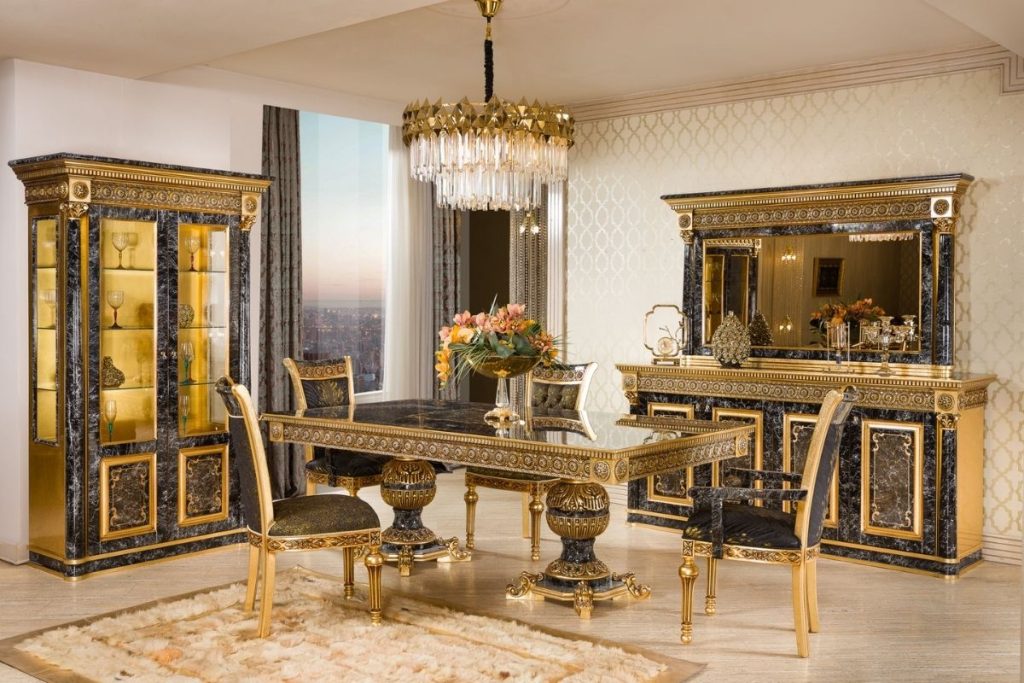
If the sofa is the heart of the living room, the dining table is the soul of the home. In 2026, the dining room has returned to its role as a dedicated space for connection, moving away from the “work-from-home” multipurpose use of previous years. We are seeing a resurgence of dark, rich woods like walnut, mahogany, and burl wood. These materials offer a depth and “monetary value” that synthetic alternatives simply cannot replicate.
From what I’ve observed, the most luxurious tables this year feature fluted or reeded wood details on the pedestals. This architectural element adds a layer of sophistication that transforms a simple table into a piece of art. According to recent market analysis, wood accounts for over 54% of the luxury furniture market share, largely because of its adaptability and the high aesthetic value of a hand-finished grain.
When selecting a piece, I recommend focusing on “open-pore” matte finishes. We have moved away from the glossy, plastic-like coatings of the past. Today’s luxury is about “feeling the tree.” You want to be able to run your hand across the surface and feel the natural texture of the oak or walnut. This connection to nature—often referred to as biophilic design—is a key marker of a high-end 2026 interior. Expect to pay between $4,000 and $12,000 for a solid wood table that can comfortably seat eight, as these pieces are increasingly treated as family heirlooms.
3. The Statement Accent Chair: Where Art Meets Ergonomics
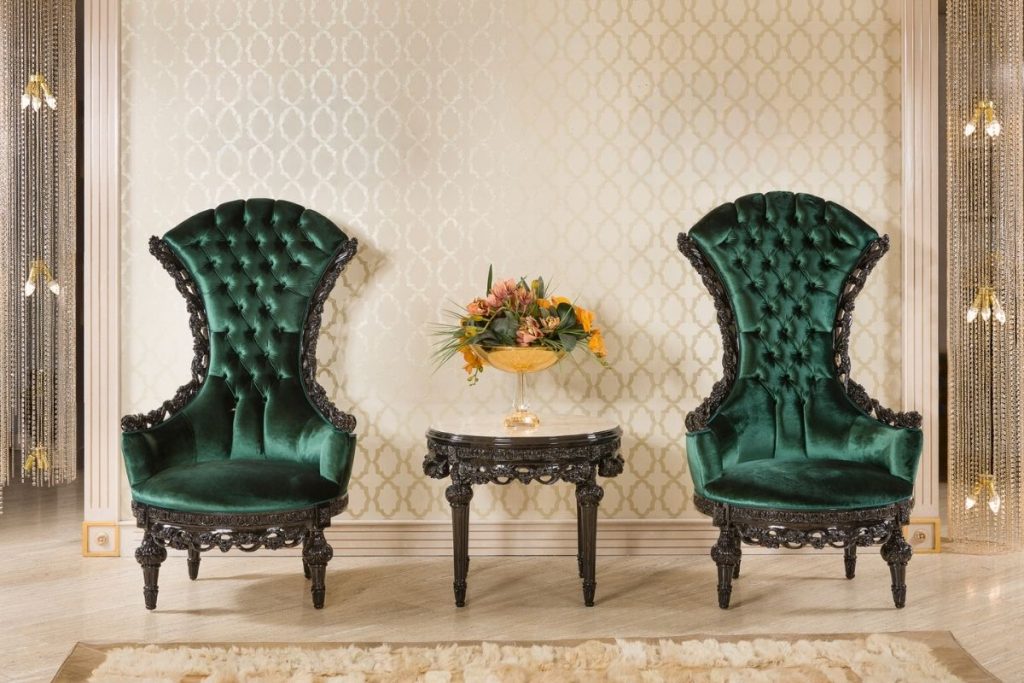
In my experience, the accent chair is the perfect opportunity to inject personality into a room without overwhelming the design. In 2026, the “statement” chair has moved toward sculptural forms that prioritize comfort as much as style. We are seeing a return to traditional silhouettes—think refreshed wingbacks or English roll-arm chairs—but reimagined with contemporary fabrics and hidden ergonomic technology.
One trend I find particularly exciting this year is the use of mixed materials. A chair might feature a hand-carved mahogany frame paired with a stainless steel base or brass accents. This “clash of textures” creates a layered, collected-over-time look that is essential for a luxurious home. Designers are also leaning into “skirted seating,” which brings a touch of traditional femininity back into modern spaces.
Data suggests that accent chairs are often the first “luxury” purchase for young professionals entering the high-end market. While a mid-range chair might cost $1,200, a true luxury statement piece in 2026 ranges from $2,800 to $6,000. These chairs are often upholstered in performance fabrics that are virtually indistinguishable from natural silk or linen but offer the durability required for modern living. Remember, in a luxury home, every piece must be as functional as it is beautiful.
4. Oversized Statement Lighting: Defining the Vertical Space
Lighting is often called the “jewelry” of a room, but in 2026, it is more like the room’s crown. We are seeing a move toward oversized, sculptural lighting that occupies the vertical space of a room, particularly in homes with open-plan layouts. In fact, 73% of homeowners now prioritize natural light maximization alongside their artificial lighting choices, using large fixtures to anchor specific zones within a large room.
The trend this year is “Mixed Metals and Warmth.” We have moved past the era of uniform finishes. Today, it is perfectly acceptable—and even encouraged—to pair a blackened metal chandelier with brass floor lamps. Sculptural floor lamps, in particular, have become essential “furniture” pieces in their own right, often featuring integrated smart technology that allows the color temperature to shift throughout the day to support your circadian rhythm.
Integrating technology is a hallmark of luxury lighting in 2026. Many high-end fixtures now come with invisible sensors that adjust brightness based on the amount of natural light entering the room. While a standard designer fixture might cost $1,500, bespoke lighting for a luxury foyer or dining room often starts at $5,000 and can reach upwards of $20,000 for hand-blown glass or custom metalwork. Investing in high-quality lighting is the fastest way to elevate a space from “nice” to “extraordinary.”
5. The Bespoke Sideboard or Buffet: Functional Art
The sideboard has evolved from a simple storage unit into a major design statement. In my observations of 2026 luxury homes, the sideboard (or buffet) often serves as a gallery for other collectibles, but the piece itself is the main attraction. We are seeing a heavy use of “liquid metal” finishes and stone tops—specifically Calacatta marble and travertine—which provide a cool, sophisticated contrast to the warm wood tones prevalent this year.
What truly sets a 2026 luxury sideboard apart is its “Invisible Intelligence.” Many of these pieces now feature hidden wireless charging pads built directly into the stone or wood tops. You can set your phone down on a beautiful marble surface, and it begins to charge with no wires in sight. Furthermore, the interior of these cabinets is often as beautiful as the exterior, featuring velvet-lined drawers and integrated LED lighting that turns on automatically when the doors are opened.
From a market perspective, customized storage solutions are seeing a 5.04% CAGR through 2031. This is driven by the desire for “multifunctional” furniture that hides clutter while adding to the room’s aesthetic. A high-end sideboard in today’s market typically costs between $3,500 and $9,000. When shopping, look for “E0” or “Carb P2” standards in the adhesives and glues used; luxury in 2026 is as much about indoor air quality as it is about visual appeal.
6. The Low-Profile Upholstered Bed: The Sanctuary Standard
The bedroom in 2026 has become a “wellness room,” and the bed is its central altar. We have moved away from the high-drama canopy beds of the past toward low-profile, fully upholstered frames that feel grounded and secure. Upholstered headboards that extend across the entire wall—sometimes called “upholstered walls”—are currently cited by 30% of designers as a surging trend.
In my experience, the choice of fabric for the bed is where you can truly express luxury. We are seeing a lot of washed linens and high-quality wools that provide a soft, matte look. The goal is to create a space that feels visually calm. Many of these bed frames also incorporate “hidden sound”—speakers built into the headboard that can play white noise or calming music without the need for visible electronic devices.
Investing in a luxury bed frame is a significant commitment. Prices for a high-end, upholstered King-size frame in 2026 usually range from $3,000 to $7,500, not including the mattress. However, the value lies in the construction. These frames are designed to be “forever furniture,” built with solid wood and reinforced joints that won’t squeak or shift over time. As we focus more on sleep hygiene and mental health, the bed has become the one piece of furniture where you simply cannot afford to cut corners.
7. Hand-Knotted Large-Scale Rugs: The Foundation of the Room
A common mistake I see in interior design is a rug that is too small for the space. In a luxury home, the rug should be large enough that all furniture pieces can sit comfortably on top of it. In 2026, the trend for “Quiet Luxury” extends to our floors, with a preference for hand-knotted rugs in natural fibers like silk, wool, and jute.
Patterns have become more subtle—what we call “quiet” patterns that rely on changes in pile height or weaving technique rather than loud colors. Irregularly shaped rugs are also on the rise, with 21% of designers identifying them as a key trend for 2026. These organic shapes work beautifully with the curved sofas mentioned earlier, creating a cohesive, fluid environment.
The cost of a high-end, hand-knotted rug is often the most surprising for homeowners. For a standard 9×12 living room rug, you should expect to spend at least $5,000, with antique or bespoke silk rugs reaching $30,000 or more. This investment is justified by the longevity of the piece; a hand-knotted wool rug can last for over 50 years with proper care. It is the literal foundation of your room’s luxury look, providing the acoustic dampening and tactile comfort that defines a high-end home.
Data Overview: The 2026 Luxury Furniture Market
To understand why these pieces are essential, it helps to look at the hard data driving the industry. The shift toward quality over quantity is backed by significant financial trends.
Table 1: United States Luxury Furniture Market Projections (2025-2031)
| Year | Market Size (USD Billion) | Growth Driver |
|---|---|---|
| 2025 | $6.29 | Rise in remote-work wellness integration |
| 2026 | $6.55 | Shift to “Quiet Luxury” & Artisanal Craft |
| 2028 | $7.16 | Expansion of Sustainable Material Tech |
| 2031 | $8.17 | AI-driven customization and Bespoke demand |
Table 2: Average Costs of Luxury Furniture Items (2026 Market Data)
| Item | Entry-Level Luxury | Custom/Designer Level | Material Standard |
|---|---|---|---|
| Curved Sofa | $2,500 – $4,500 | $10,000+ | Bouclé, Top-Grain Leather |
| Dining Table | $4,000 – $6,500 | $12,000+ | Solid Walnut, Mahogany |
| Accent Chair | $1,800 – $3,000 | $6,000+ | Mixed Metals, Performance Velvet |
| Sideboard | $3,500 – $5,000 | $9,000+ | Marble Tops, Liquid Metal Finishes |
| Statement Rug | $5,000 – $8,000 | $25,000+ | Hand-Knotted Wool/Silk |
Material Mastery: Why Walnut and Burl Are Back
One of the most frequent questions I receive is why we have moved so decisively toward darker woods in 2026. After years of light-colored “Scandi” oak dominating the market, there is a collective craving for depth and history. Rich walnut and burl wood provide a sense of groundedness. Burl wood, with its intricate, swirling grain patterns, is essentially nature’s own abstract art. It is being used thoughtfully in 2026 as “statement moments” on coffee tables, chests of drawers, and even kitchen islands.
But it isn’t just about the type of wood; it’s about how it is treated. The “Green Revolution” in luxury means that we now demand FSC-certified woods and non-toxic finishes. In my experience, wealthy clients are now more concerned with what is inside their furniture than what is on the outside. They want to know that their beautiful burl chest isn’t off-gassing formaldehyde into their home. This focus on “material intelligence” has led to the growth of sustainable luxury materials at a rate of 6.89% CAGR, significantly outpacing the general furniture market.
Furthermore, we are seeing a fascinating return to “Glossy Artisanal Wood.” While matte finishes are the standard for large surfaces, small accent pieces are being finished with high-gloss lacquers that highlight the complexity of the wood grain. This interplay between matte and gloss, dark wood and light upholstery, is what gives a 2026 luxury home its sophisticated, multi-dimensional look.
The Rise of “Quiet Luxury 2.0”: Texture Over Tone
In 2026, the phrase “Quiet Luxury” has evolved. In its first iteration, it was about beige-on-beige minimalism. In its 2.0 version, it is about “Visual Silence, Tactile Noise.” Since our color palettes have remained relatively simple—creams, soft greys, and earthy browns—the materials must provide the visual interest.
This is why we see such a heavy emphasis on texture. A room might be entirely neutral, but it will feature a bouclé sofa, a hand-carved stone coffee table, a silk rug, and raw linen curtains. These layers of texture create a “storied” look—an interior that feels collected over time rather than purchased from a single showroom. This “curatorial approach” is what differentiates a truly luxurious home from a merely expensive one.
I have found that the most successful luxury designs this year are those that embrace “Soft Minimalism.” It is about having fewer things, but having things that are better. It is about a space that feels welcoming rather than stark. This approach allows the architecture of the home to breathe and ensures that the focus remains on the quality of the materials and the comfort of the inhabitants.
Sustainable Opulence: The New Standard for Affluence
Sustainability is no longer a “niche” concern in the high-end market; it is a non-negotiable standard. In 2026, 75% of millennials—who are now a major force in the luxury home market—are willing to pay more for eco-friendly designs. From what I’ve seen, this has led to a major shift in manufacturing. Luxury brands are now competing on their “supply chain transparency” as much as their design.
This green revolution is manifesting in several ways. We are seeing the rise of “forever furniture”—pieces built to last generations, which is the ultimate form of sustainability. We are also seeing a 12% year-over-year growth in the sustainable interior sub-market. Materials like reclaimed pine, recycled metals, and cork are being elevated to luxury status through incredible craftsmanship.
One of the most impactful changes is the move toward “E0” standards. Many high-end bespoke manufacturers now ensure that their furniture releases almost zero chemicals. This is particularly important as our homes become more airtight for energy efficiency. In my view, true luxury in 2026 is the peace of mind that comes from knowing your home environment is as healthy as it is beautiful.
Invisible Intelligence: Integrating Tech Seamlessly
We live in a digital world, but we want our homes to be sanctuaries from that world. This paradox has given rise to “Invisible Intelligence” in furniture. We are no longer seeing black wires, plastic charging docks, or blinking LED panels. Instead, technology is hidden within the furniture itself.
In my recent walkthroughs of designer homes, I have seen nightstands where the stone top is a wireless charger, sofas with built-in haptic feedback for home theaters that are entirely hidden under the upholstery, and kitchen cabinets that open with a gentle voice command. Smart home tech integration in furniture preferences has risen by 35% since 2024.
The key to luxury tech is that it should be “Low-Tech Look, High-Tech Function.” It should never distract from the aesthetic of the room. AI is also playing a role, not just in the furniture itself, but in how we plan our spaces. “AI Room Planners” are now used to optimize furniture layouts for airflow, lighting, and natural energy use. This level of precision is the new hallmark of high-end interior design.
Practical Tips: How to Spot Quality in 2026
When you are investing in luxury furniture, you need to know exactly what you are paying for. In my years of consulting, I have developed a few “litmus tests” for quality that remain true in 2026.
First, check the weight. High-end furniture is almost always heavy. A solid walnut dining table or a kiln-dried hardwood sofa frame will have a substantial weight that particle-board alternatives simply cannot match. Second, look at the joinery. In luxury wood pieces, you should see dovetail or mortise-and-tenon joints, not just screws and glue. These traditional methods are used because they allow the wood to expand and contract naturally over time without breaking.
Third, investigate the upholstery. In 2026, we look for “pattern matching.” If you have a striped or patterned fabric, the pattern should continue seamlessly across the seams. This requires more fabric and more labor, which is why it’s a marker of a high-end piece. Finally, ask about the “rub count” for fabrics. A luxury-grade performance fabric should have a Martindale or Wyzenbeek rating of 30,000 to 50,000 double rubs, ensuring it will withstand years of use without showing wear.
Maintenance: Caring for Your Luxury Investment
A luxury home only looks luxurious if the pieces are well-maintained. In my experience, most damage to high-end furniture comes from improper cleaning. For the “open-pore” wood finishes popular in 2026, you should avoid any silicone-based sprays. Instead, use a simple damp microfiber cloth followed by a dry one. For walnut and oak, a high-quality furniture wax applied once a year is usually all that is needed to keep the wood hydrated.
For the textured fabrics like bouclé and velvet that are so prevalent now, regular vacuuming with a soft brush attachment is essential to prevent dust from settling into the fibers. If a spill occurs, the “blot, don’t rub” rule is more important than ever. Because many 2026 fabrics are treated with eco-friendly stain resistance, most spills can be lifted with a bit of distilled water.
Lastly, remember that natural materials age. Marble will develop a “patina” over time, and leather will soften and change color slightly with sun exposure. In the world of “Quiet Luxury,” these signs of life are not seen as flaws; they are seen as evidence of a home that is loved and lived in. This “wabi-sabi” appreciation for aging is a key part of the 2026 design philosophy.
Step-by-Step: Furnishing Your Luxury Space
Faced with a blank room, the process of furnishing can be overwhelming. We recommend following this systematic approach to ensure a cohesive and luxurious result.
Step 1: Identify Your Anchor
Start with the largest piece in the room—usually the sofa or the dining table. This piece will dictate the scale and style of everything else. In 2026, we suggest choosing a piece with an organic, curved silhouette to soften the room’s architecture.
Step 2: Set the Foundation
Select your rug. Ensure it is large enough to ground all the furniture in the “conversation area.” Opt for natural fibers like wool or silk in a “quiet” pattern that complements your anchor piece without competing with it.
Step 3: Layer in the “Supporting Cast”
Add your accent chairs and storage pieces (like a sideboard). This is where you can introduce different textures and materials—think a burl wood cabinet next to a velvet chair. Ensure there is a balance of “visual weight” across the room.
Step 4: Define the Vertical Space
Install your statement lighting. This fixture should act as the room’s focal point when looking up. We recommend a sculptural piece that mixes metals, such as brass and blackened steel, to add modern sophistication.
Step 5: Integrate Technology and Details
Finally, integrate your “invisible” tech—hidden chargers, smart lighting controls—and add the personal touches. A few high-quality ceramics, a stack of art books, and biophilic elements like a large indoor tree will bring the space to life.
Key Takeaways for 2026 Luxury Homes
– Prioritize “Quiet Luxury 2.0”: Focus on high-quality materials (walnut, marble, wool) and tactile textures rather than overt branding.
– Embrace Organic Curves: Curved sofas and sculptural chairs are the definitive silhouettes for 2026, providing comfort and visual flow.
– Invest in “Forever Furniture”: With the US luxury market hitting $6.55 billion, consumers are viewing pieces as long-term financial and heirloom investments.
– Sustainability is Standard: 75% of millennial luxury buyers demand eco-friendly, non-toxic, and FSC-certified materials.
– Hide the Technology: Integrated chargers and hidden sound systems allow for a tech-ready home without the clutter of wires.
– Scale Matters: Large-scale rugs and oversized lighting are essential for anchoring modern, open-plan living spaces.
FAQ: Navigating the 2026 Luxury Furniture Market
Q: Why are furniture prices so much higher in 2026 than a few years ago?
A: Several factors are at play. Most significantly, a 25% tariff on imported upholstered furniture took effect in late 2025. Additionally, the cost of raw materials like high-grade walnut and top-grain leather has risen by approximately 15% due to increased global demand for sustainable sourcing.
Q: Is “Quiet Luxury” just a trend that will go away?
A: From what I’ve observed, it is more of a cultural shift than a trend. As our lives become more digital and fast-paced, the desire for a home that feels “quiet,” tactile, and grounded in nature is a biological response rather than a fashion choice. It is expected to remain the dominant aesthetic through the end of the decade.
Q: Can I mix different wood tones in the same room?
A: Absolutely. In fact, in 2026, a “matched set” is considered quite dated. The key is to have a “bridge” piece—like a rug or a piece of art—that contains colors from both wood tones. Mixing dark walnut with lighter oak creates a layered, sophisticated look that feels collected over time.
Q: What is the most important piece to spend money on?
A: In my experience, the sofa is the most important. It is the most-used piece of furniture in the home and dictates the comfort level of your living space. A high-quality sofa will last 15-20 years, whereas a budget one will likely need replacing in 3-5 years.
Q: How do I incorporate technology without it looking “techy”?
A: Look for furniture with “Integrated Intelligence.” Many high-end brands now offer sideboards with hidden charging pads or bed frames with invisible speakers. The goal is for the technology to be felt, not seen.
Q: Are traditional furniture styles coming back?
A: Yes. We are seeing a “Refreshed Traditional” movement. This involves using classic silhouettes like Chippendale or Wingback chairs but updating them with contemporary fabrics and simplified lines. It’s a way of bringing history into a modern home without it feeling like a museum.
Conclusion: The Lived-In Luxury
Ultimately, the goal of a luxury home in 2026 is to create a space that is a true reflection of you. It is about moving away from the “catalog” look toward an environment that feels personal, comfortable, and enduring. By investing in these seven essential pieces—the sculptural sofa, the artisanal table, the statement chair, the oversized lighting, the bespoke sideboard, the upholstered bed, and the hand-knotted rug—you are creating a foundation of elegance that will serve you for decades.
In my view, the most beautiful homes are not those that are the most expensive, but those that show a mastery of material and a commitment to quality. As we move forward into this new era of design, let your furniture be a testament to your values: sustainability, craftsmanship, and the timeless beauty of “Quiet Luxury.” (Please note: This article is for informational purposes; for specific financial or architectural decisions, please consult with a professional interior designer or financial advisor.)