



The landscape of villa decoration has undergone a profound transformation as we move through 2026. For those of us who have spent years navigating the high-end interior design world, the current shift is both nostalgic and revolutionary. We are seeing a move away from the cold, clinical minimalism that dominated the early 2020s, replaced by a deep-seated craving for “Quiet Luxury”—a style that prioritizes material integrity, artisanal craftsmanship, and historical resonance. In my recent consultations with villa owners from the hills of Tuscany to the coastal estates of Malibu, the consensus is clear: the home must be a sanctuary that tells a story, and nothing tells a story quite like classic furniture.
As of 2026, the global luxury furniture market has reached an estimated valuation of $28.55 billion, growing at a steady compound annual growth rate of approximately 6.2%. This growth is fueled by a burgeoning class of high-net-worth individuals who view furniture not merely as functional objects, but as long-term assets. In the luxury villa segment, which accounts for nearly 58% of all high-end furniture sales, the preference has swung back toward refreshed traditional silhouettes. We are no longer looking for “disposable” high-fashion pieces; instead, we are sourcing heirlooms that will appreciate in value and aesthetic appeal over the next fifty years.
The hallmark of 2026 villa decoration is the “scenographic” use of space. Furniture is expected to act as the quiet architecture of the room, creating focal points that are both sculptural and functional. From the resurgence of deep walnut cabinetry to the integration of biometric sensors into neoclassical bed frames, the “classic” furniture of today is a sophisticated dialogue between the craftsmanship of the 18th century and the technological demands of the 21st.
Table of Contents
ToggleThe Evolution of Classic Furniture in 2026
In my experience, the definition of “classic” has broadened significantly over the last two years. While we used to categorize classic furniture into rigid boxes—Baroque, Victorian, or Louis XIV—the modern villa owner in 2026 prefers a “collected” look. This involves a strategic mix of eras that feel intentionally curated rather than strictly matched. The current trend, often referred to as “Refreshed Traditionalism,” takes iconic silhouettes from the Chippendale or Klismos eras and reinterprets them with contemporary fabrics and eco-friendly finishes.
The 2026 evolution is marked by a softening of lines. We are seeing a departure from sharp, aggressive angles in favor of organic, enveloping shapes. In the villas I’ve visited recently, the rigid, formal sofas of the past have been replaced by curved, modular seating that encourages conversation and rest. This shift toward “emotional comfort” is paramount. A piece of furniture in 2026 must be as tactilely pleasing as it is visually stunning. Fine woods like mahogany are being finished with low-VOC matte oils rather than high-gloss lacquers, allowing the natural grain to be felt under the fingertips.
Furthermore, the “Classic” label now encompasses a global perspective. We are seeing a massive resurgence in 20th-century French and Swedish mid-century pieces, which are being integrated into Mediterranean-style villas for a look that is both airy and grounded. This blending of styles represents a more mature form of luxury, one where the owner’s personal travels and cultural heritage are reflected in the choice of a hand-carved teak cabinet from Kerala or a patinated brass console from Milan.
Market Dynamics: The Economics of Villa Furnishing in 2026
Understanding the financial landscape of luxury furnishing is essential for any villa owner. In 2026, the cost of raw materials—particularly high-grade solid wood and Italian marble—has seen a significant uptick due to stricter environmental regulations and the rising demand for ethical sourcing. Based on current market data, furnishing a high-end villa of 400 square meters or more typically requires an investment ranging from $150,000 to $300,000, depending on the level of customization.
From what I’ve observed in the industry, the “cost-per-year” metric is now the primary driver for luxury purchases. Savvy investors are moving away from mid-tier retail brands ($30,000-$60,000 for a full home) and opting for bespoke, artisan-made pieces. While the upfront cost is higher, these pieces are designed to last for decades, effectively making them more economical than mass-produced items that require replacement every five to seven years.
| Market Metric (2026) | Value / Percentage |
|---|---|
| Global Luxury Furniture Market Size | $28.55 Billion |
| Projected Market Size by 2030 | $37.03 Billion |
| Residential Segment Share | 55.03% |
| Preferred Material: Wood (Share) | 45.87% |
| Average CAGR (2025-2030) | 6.2% |
The residential segment continues to lead the market, with living room seating being the top revenue generator. This is because the living room has become a multi-functional hub for both grand-scale entertaining and intimate family life. In 2026, we are seeing a 6.5% increase in the demand for custom-made dining suites, as the trend of hosting elaborate “at-home” dinner parties has fully returned to the social calendar.
The Resurgence of Refreshed Traditional Silhouettes
If you were to walk into a flagship design gallery in 2026, the first thing you would notice is the return of the silhouette. For a long time, furniture was reduced to basic geometric shapes—the cube, the rectangle, the slab. But today, the most preferred pieces for villa decoration are those that celebrate the curve and the carved detail. Specifically, the “Klismos” chair, with its elegant splayed legs and curved backrest, has become a staple in modern-classic dining rooms.
In my consultations, I often recommend the “refreshed” Chippendale style for homeowners who want a sense of gravitas without the stuffiness. Modern makers are taking the intricate fretwork and cabriole legs of the 18th century and executing them in lighter woods like ash or bleached walnut. This creates a piece that feels historically significant but doesn’t weigh down the room. It’s about achieving a “visual lightness” while maintaining structural integrity.
Another silhouette making a massive comeback is the English roll-arm lounge chair. In 2026, these are often upholstered in high-performance velvets or heavy linens with decorative dressmaker details like bullion fringe or contrast piping. This “dapper” look provides a sense of comfort that modern minimalist furniture simply cannot replicate. It invites you to sit and stay, which is exactly what a villa sanctuary should do.
Essential Living Room Pieces: The Scenographic Presence
The 2026 living room is all about the “hero piece.” Rather than cluttering a vast villa space with multiple small items, designers are choosing one or two statement furnishings that command the room. The most preferred item for this role is the curved, oversized sofa. These pieces act as sculptural anchors, often positioned in the center of the room to define the flow of space without the need for walls.
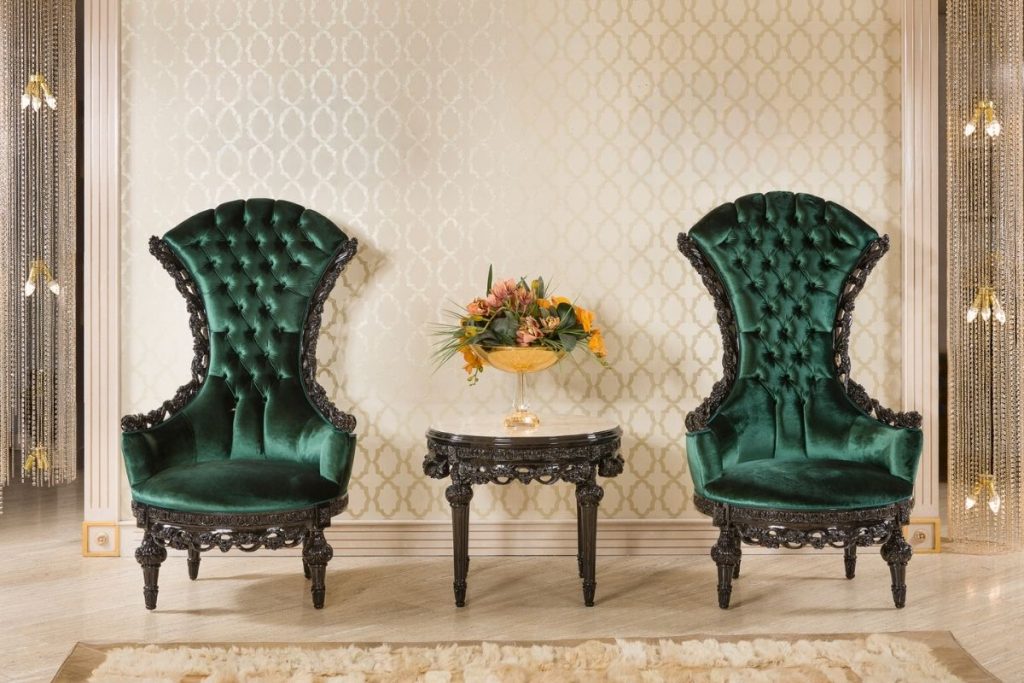
I have found that the “Chesterfield” sofa remains a perennial favorite, but it has been reinvented for 2026. Instead of the traditional dark, heavy leather, we are seeing it in deep jewel tones like emerald green or sapphire blue, often in “combed” velvets that offer a rich, tactile experience. The tufting is deeper, the proportions are more generous, and the comfort levels are engineered through advanced multi-density foam layers.
Complementing these sofas are sculptural consoles and coffee tables. In 2026, the preference is for “weighty” tables made from solid stone or thick, live-edge wood. These pieces serve as a counterpoint to the soft upholstery of the seating. A coffee table is no longer just a place to put a book; it is a piece of functional art. Many of the villas I design now feature coffee tables with integrated, hidden storage or built-in wireless charging pads that are invisibly embedded beneath a thin layer of marble veneer.
Dining in Grandeur: The New 12-Seater Statement
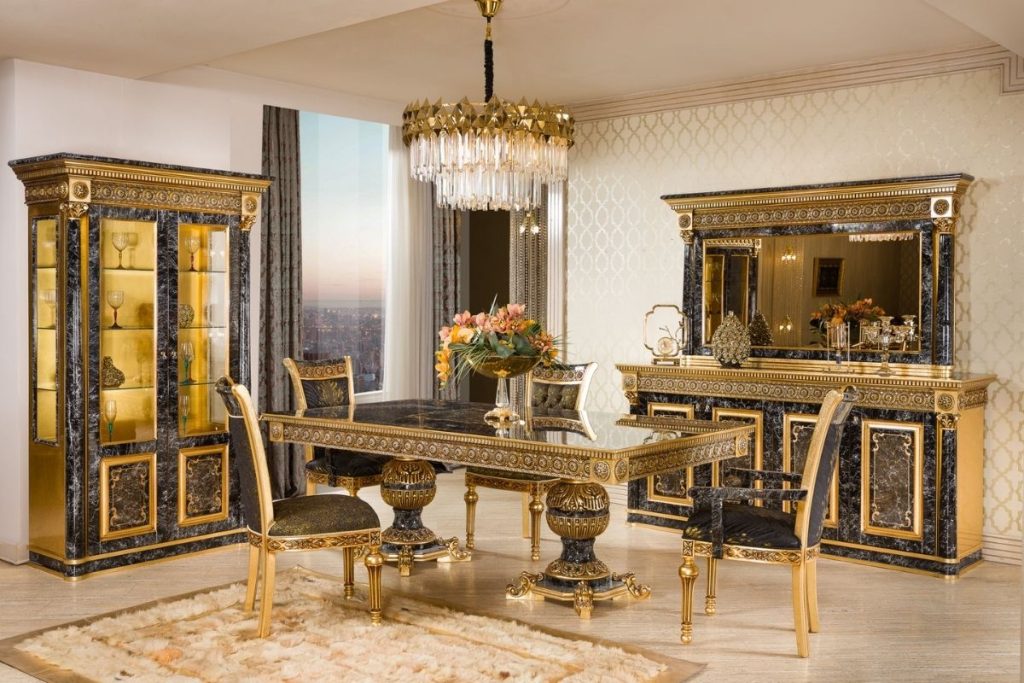
In 2026, the dining room has regained its status as the “theatre” of the home. As hospitality and prestige become central themes in villa living, the demand for large-scale, artisanal dining tables has surged. The most sought-after design is the 12-seater statement table, often crafted from a single slab of ancient walnut or a rare variety of marble like Calacatta Viola with its dramatic purple veining.
From my perspective, the dining table is where the “material as protagonist” trend is most evident. Owners are moving away from simple rectangular forms toward soft, elliptical, or “racetrack” shapes. These rounded edges allow for a better flow of conversation and a more inclusive dining experience. The base of the table has also become a focal point, with many classic designs featuring pedestal bases in hand-forged bronze or carved stone.
To complement these grand tables, the 2026 villa dining room requires lighting that acts as “jewelry” for the space. We are seeing a move away from discreet recessed lighting in favor of grand, tiered chandeliers. Whether it is a contemporary take on a crystal Maria Theresa chandelier or a mid-century inspired brass Sputnik, the light fixture must have a presence. It defines the verticality of the space, especially in the double-height dining halls that are currently popular in modern villa architecture.
Bedroom Sanctuaries: Neoclassical Comfort and Modern Tech
The 2026 primary bedroom is no longer just a place to sleep; it is a wellness retreat. Consequently, the furniture selected for this space must promote both physical comfort and mental clarity. The most preferred classic piece for a villa bedroom today is the canopy or four-poster bed. These frames provide a “room within a room” feeling, offering a sense of security and intimacy in a large villa suite.
In terms of aesthetics, neoclassical frames with subtle gold leaf accents or hand-painted details are highly favored. However, beneath this traditional exterior, 2026 furniture is incredibly high-tech. I often specify beds that include integrated circadian lighting in the headboard and wellness sensors that monitor sleep quality without the need for wearable devices. The challenge—and the luxury—is keeping this technology entirely invisible, maintaining the classic aesthetic of the room.
Storage pieces, such as the armoire and the “Iris Serpentine” chest, are also seeing a resurgence. In my experience, homeowners are tired of the “built-in” look that makes a bedroom feel like a hotel. They want freestanding, character-rich pieces that look like they were inherited. A beautifully weathered Swedish-style tall cabinet, with its muted gray-blue paint finish and visible craftsmanship, adds a layer of “soulful warmth” that contemporary cabinetry often lacks.
The Dominance of Fine Woods: Walnut and Mahogany Reborn
If there is one material that defines 2026 luxury, it is wood. While light oak and ash dominated the early 2020s, the current preference has shifted toward deeper, richer tones. Walnut, with its complex grain patterns and chocolatey hues, is currently the top choice for villa furniture, accounting for nearly 45% of the high-end wood market. Mahogany is also making a comeback, particularly in pieces that lean toward 18th-century English and French styles.
The reason for this shift is simple: depth. In a large villa, light woods can sometimes feel “lost” or overly casual. Deeper woods provide an instant sense of warmth and dimension. In my work, I find that mixing wood tones is the secret to a successful “collected” look. Pairing a dark mahogany dining table with lighter, bleached-ash chairs prevents the room from feeling too heavy or dated.
Furthermore, the finishing techniques used in 2026 have evolved. We are seeing a move toward “glossy artisanal wood”—not the plastic-looking high-gloss of the 1980s, but a deep, hand-rubbed luster that highlights the wood’s natural character. These finishes are increasingly eco-friendly, using plant-based oils and waxes that are safe for both the craftsmen and the villa inhabitants.
| Material Type | 2026 Preference Share | Key Characteristics |
|---|---|---|
| Solid Walnut | 45% | Rich color, fine grain, high durability |
| Mahogany | 20% | Classic status, reddish-brown hue, prestigious |
| Reclaimed Teak | 15% | Sustainable, textured, biophilic appeal |
| Bleached Ash/Oak | 12% | Modern-traditional mix, visual lightness |
| Rare Burl Woods | 8% | Sculptural, high-impact, artistic |
The Role of Dramatic Stone and Metallic Accents
While wood is the anchor, the 2026 villa is “layered” with stone and metal. We are seeing a move away from safe, white Carrara marble toward more dramatic, “scenographic” stones. Marbles with heavy veining in shades of burgundy, forest green, and deep gold are being used for everything from table tops to decorative wall panels behind classic consoles.
In my experience, the use of stone has become more sculptural. We are seeing solid stone plinths used as side tables and hand-carved stone basins in guest “powder rooms” that feel like ancient ruins. This “stony” weightiness provides a sense of permanence and luxury that synthetic materials cannot match. It connects the interior of the villa to the natural world outside.
Metallic accents in 2026 have moved toward warmer, patinated finishes. Satin bronze, aged brass, and “champagne” gold are preferred over polished chrome or silver. These metals are often used as inlays in wooden furniture or as the frames for “jewelry-like” lighting fixtures. The goal is a “quiet” glow rather than a bright, flashy shine. A bronze inlay in a walnut dining table, for example, adds a layer of sophistication that is only noticeable upon closer inspection—the epitome of 2026 luxury.
Sustainable Luxury: Ethical Sourcing for the Conscious Owner
Sustainability is no longer a “buzzword” in 2026; it is a mandatory requirement for the luxury consumer. Villa owners are increasingly asking for the provenance of their furniture. They want to know that the wood was sourced from certified, sustainably managed forests and that the leather was tanned using eco-friendly, chrome-free processes. This shift toward “Conscious Luxury” has led to a boom in high-end furniture made from reclaimed materials.
I have seen a significant rise in the use of “certified antique” woods—timber reclaimed from old European barns or Southeast Asian colonial buildings—which is then repurposed into modern-classic forms. This material carries a history and a patina that new wood simply doesn’t have. It also fits perfectly with the 2026 trend of “storytelling” through interior design.
| Sustainable Feature | 2026 Adoption Rate | Impact on Value |
|---|---|---|
| FSC-Certified Wood | 85% | Standard Expectation |
| Low-VOC Finishes | 92% | Health & Wellness Bonus |
| Recycled Metal Frames | 40% | Emerging Luxury |
| Eco-Tanned Leather | 65% | High-End Preference |
Furthermore, the 2026 market is seeing the rise of “circular design.” This means pieces are designed to be easily repaired, reupholstered, or even disassembled and recycled at the end of their long life. For a villa owner, this sustainability adds a layer of “moral comfort” to their purchase, knowing that their beautiful home does not come at the expense of the environment.
Smart Technology: The Invisible Concierge in Classic Frames
One of the most exciting aspects of 2026 villa decoration is the “phygital” (physical + digital) integration. Today’s classic furniture is smarter than ever, yet you would never know it by looking at it. The trend is toward “Hidden Tech.” We are seeing classic-style mahogany desks with wireless charging zones invisibly integrated into the wood, and “smart mirrors” housed in ornate, hand-carved frames that can display the morning news or weather with a simple voice command.
In my recent projects, I have integrated automated climate and lighting controls directly into the furniture pieces themselves. A bedside nightstand might feature haptic touch controls under a silk-lined drawer, allowing the owner to close the curtains or dim the lights without reaching for a phone. This level of integration ensures that the villa remains functional and future-proof without sacrificing its timeless aesthetic.
The 2026 villa also utilizes “sensory” furniture. This includes chairs and beds equipped with subtle acoustic speakers for “sound bathing” or wellness sensors that adjust the firmness of a mattress based on the sleeper’s posture. The luxury here is the seamlessness; the technology serves the user quietly, maintaining the illusion of a simpler, more elegant era.
Color Palettes Defining the 2026 Luxury Aesthetic
The cool, monochromatic grays of the previous decade have officially been retired in 2026. Instead, we are seeing a return to “warmth and substance.” The most preferred color palettes for villa furniture today are grounded in earthy, sophisticated neutrals—think warm taupe, creamy ivory, and rich “satin bronze.” These colors provide a calm, layered base that allows the materials themselves to shine.
However, there is also a bold counter-trend toward “saturated hues with purpose.” I am seeing a lot of villa owners opting for furniture in deep, moody tones like burgundy, midnight navy, and forest green. These colors are used to create “jewelry box” rooms—small, intimate spaces like libraries or dining nooks where the color creates a sense of enveloping luxury.
Pattern is also back in a big way. We are seeing a resurgence of “Heritage Florals” and “Dapper Plaids” on classic upholstered pieces. These patterns are often used on a single “hero” piece, such as a wingback chair or a set of skirted dining chairs, to add personality and a “collected” feel to the room. The trick in 2026 is to balance these bold moments with plenty of negative space, a concept drawn from the Japanese “Ma”—the power of the void.
Outdoor Living: Extending the Classic Interior to the Terrace
For a luxury villa, the outdoor space is just as important as the interior. In 2026, the trend is to treat the terrace or patio as a “true outdoor living room.” This means the furniture chosen for these spaces must reflect the same level of sophistication and classic design as the pieces inside. We are moving away from flimsy plastic or simple wicker toward “contract-grade” luxury pieces that can withstand the elements while looking like indoor furniture.
I often specify outdoor sofas with classic “roll-arm” silhouettes, upholstered in high-performance, fade-resistant acrylic fabrics that feel as soft as linen. The frames are often made from solid teak or powder-coated aluminum with hand-applied finishes that mimic the look of aged bronze or wood. This creates a “seamless flow” between the indoor and outdoor spaces, a hallmark of 2026 villa architecture.
Dining outdoors has also become a grander affair. We are seeing large, 10-seater outdoor dining sets with stone tops and “Klismos-style” metal chairs. To complete the classic look, these areas are anchored by oversized outdoor rugs and “monumental” planters. The addition of fire features—often integrated into classic-style stone coffee tables—ensures that the outdoor space remains a viable “living room” well into the evening.
Artisanal Craftsmanship vs. Mass Customization
The 2026 villa owner places a high premium on the “hand of the maker.” There is a significant distinction between furniture that is merely “custom” and furniture that is “artisan-made.” While technology like CNC (Computer Numerical Control) and 3D printing is used to ensure structural precision, the final finishing is always done by hand.
In my experience, the “imperfections” of hand-carved wood or hand-forged metal are what give a piece its value. A hand-applied gold leaf finish on a neoclassical mirror, for example, has a depth and a “glow” that a machine-applied finish can never replicate. This appreciation for “the soul of the object” is driving the growth of boutique furniture houses and independent artisans.
However, “Mass Customization” is also a major trend. Many high-end brands now offer “bespoke configurators” that allow villa owners to choose the exact wood, fabric, and hardware for a piece. This provides the “exclusivity” that luxury buyers crave while maintaining the reliability and lead times of an established brand. In 2026, luxury is about having the freedom to create a home that is entirely unique to your personal taste.
Maintenance and Longevity: Protecting Your Heirloom Investment
Owning classic furniture is a responsibility as much as it is a joy. In 2026, there is a renewed focus on the preservation and maintenance of high-end pieces. Because these items are viewed as long-term assets, owners are more willing to invest in professional care. For solid wood pieces, this involves regular waxing or oiling with high-quality, natural products to maintain the wood’s luster and prevent cracking.
For upholstered pieces, the trend toward “performance fabrics” has made maintenance much easier. Even high-end velvets and linens are now treated with invisible, eco-friendly barriers that repel stains and liquids. However, I always advise my clients to rotate their cushions and keep furniture out of direct, prolonged sunlight to prevent fading—especially in sun-drenched villas.
Finally, “restoration” has become a popular service. In 2026, we are seeing a trend of “upcycling” high-quality vintage frames with modern fabrics and finishes. This not only preserves the history of the piece but also aligns with the current focus on sustainability. A well-maintained piece of classic furniture from 2026 is expected to be still in use in 2076, serving as a testament to the enduring appeal of quality design.
Step-by-Step: How to Source and Style Classic Furniture for Your Villa
Designing a villa with classic furniture requires a strategic approach to ensure the space feels layered and timeless rather than dated. Follow these steps to achieve a professionally curated look.
Step 1: Define the Architectural Narrative
Before buying a single chair, look at the architecture of your villa. Is it a modern glass-box villa or a traditional stone estate? Your furniture should either complement the architecture or provide a deliberate, sophisticated contrast. For example, a modern villa looks stunning with a few “weighty” 18th-century French pieces to ground the space.
Step 2: Source Your “Anchor” Pieces
Identify the “hero” pieces for each room—the sofa in the living room, the table in the dining room, and the bed in the primary suite. These should be the highest quality pieces your budget allows. Look for solid wood construction, traditional joinery (like dovetail or mortise-and-tenon), and classic silhouettes that won’t go out of style.
Step 3: Layer Materials and Eras
Avoid the “showroom” look where everything matches. Mix wood tones (e.g., walnut with ash), metals (e.g., bronze with brass), and eras (e.g., a Victorian armchair with a mid-century coffee table). This creates the “collected over time” aesthetic that is the hallmark of 2026 luxury.
Step 4: Integrate Functional Technology
Ensure your classic furniture works for your modern lifestyle. Look for pieces with hidden charging stations, integrated lighting, or wellness sensors. Work with an AV specialist to ensure the technology is entirely invisible, maintaining the room’s historical feel.
Step 5: Curate Personal Artifacts and Textiles
The final layer of decoration should be deeply personal. Add “vintage lighting,” “grouped art,” and “scenographic accessories” that reflect your travels and heritage. Use high-quality textiles like silk, velvet, and linen to add “tactile comfort” to the room.
*
Key Takeaways for 2026 Villa Decoration
* Quiet Luxury Dominates: The trend has shifted from overt branding to “aesthetic exclusivity” and material integrity.
* Refreshed Traditionalism: Classic silhouettes (Klismos, Chippendale) are being reinterpreted with lighter woods and modern fabrics.
* Investment over Trend: Villa owners are spending $150k-$300k+ on heirloom pieces that offer a better “cost-per-year” value than mass-market furniture.
* Material Focus: Deep woods like Walnut and Mahogany are the preferred choice, often paired with dramatic, veined marbles and patinated bronze.
* Invisible Technology: Smart home features are being invisibly integrated into classic furniture frames to maintain a timeless aesthetic.
* Sustainability is Mandatory: Ethical sourcing, FSC-certified woods, and circular design principles are key drivers for the 2026 luxury consumer.
FAQ: Frequently Asked Questions about Villa Furniture
What defines “Classic Furniture” in 2026?
In 2026, “Classic Furniture” refers to pieces that utilize traditional silhouettes—such as those from the 18th and 19th-century French, Swedish, and English eras—reimagined for modern living. This includes the use of sustainable, high-quality materials (like solid walnut or mahogany) and the integration of “invisible” technology within artisanal frames.
How much should I budget for furnishing a new luxury villa?
Based on 2026 market data, a mid-to-high-range budget for a 400 sqm villa typically falls between $150,000 and $300,000. For ultra-luxury projects involving custom millwork and rare materials, the investment can exceed $700 per square meter.
Are lighter woods like Oak still in style?
While light oak is still used, there is a strong preference in 2026 for richer, deeper tones like walnut and mahogany. These “warmer” woods add more dimension and a sense of “gravity” to the large, open-plan spaces commonly found in villas.
How do I maintain the value of my luxury furniture?
To preserve your investment, perform regular maintenance such as oiling solid wood, using professional-grade fabric protectors, and keeping pieces out of direct sunlight. Choosing “artisan-made” pieces with traditional joinery also ensures the piece remains structurally sound for decades.
Is “Minimalism” completely out of style in 2026?
Minimalism has evolved into “Warm Minimalism.” It still values clean lines and uncluttered spaces, but it now incorporates “tactile textures,” “warm woods,” and “curved profiles” to create environments that feel more welcoming and less clinical.
Can I mix modern tech with antique-style furniture?
Yes, this is one of the biggest trends for 2026. The key is “Invisible Tech”—integrating wireless chargers, smart sensors, and lighting controls beneath veneers or within drawers so that the technology serves you without compromising the classic aesthetic.
*