




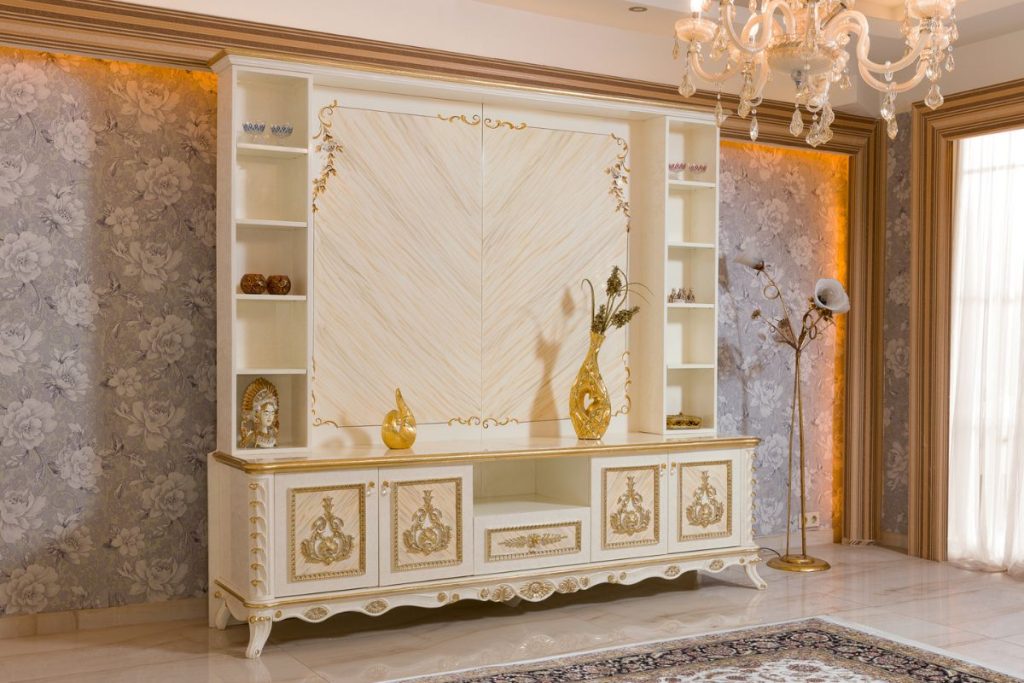

In an era where digital precision and AI-driven manufacturing dominate every aspect of our lives, the value of the human touch has reached an unprecedented premium. As of 2026, the luxury furniture market has seen a distinct pivot away from the cold perfection of mass-produced items toward pieces that tell a story of human labor, tradition, and artistry. When you walk into a high-end showroom or an antique gallery today, the term “hand-carved” is often used as a catch-all marketing phrase. However, for the discerning collector or the homeowner looking to invest in a true heirloom, understanding the nuances of genuine craftsmanship is essential.
True hand-carving is not just an aesthetic choice; it is a structural and artistic commitment. Research into the 2026 luxury furniture market, which is currently valued at approximately $38.2 billion globally, suggests that “bespoke and artisanal” segments are growing at a faster rate than standard luxury lines. This growth—roughly 5.3% annually—is driven by a desire for authenticity. In my experience observing the market’s evolution, the most common mistake buyers make is confusing CNC (Computer Numerical Control) machine-carved wood for the work of a master craftsman. While machines have become incredibly sophisticated, they still cannot replicate the “soul” of a piece carved by a human hand.
Identifying real hand-carved furniture requires a multi-sensory approach. You cannot simply look at a piece; you must feel its depth, analyze its shadows, and understand the physics of how a metal tool interacts with the organic fibers of the wood. In the sections that follow, we will explore the technical markers that separate a machine-produced replica from a genuine work of art, ensuring that your 2026 investments are both culturally and financially sound.
Table of Contents
ToggleThe Core Signs of Hand-Carved Excellence
When I first started evaluating high-end furniture, I was often blinded by the sheer complexity of a design. A sprawling mahogany headboard with hundreds of interlocking flowers can look impressive, but complexity does not always equate to hand-craftsmanship. In 2026, the most reliable sign of a hand-carved piece remains its subtle irregularities. A machine, no matter how advanced, is programmed for perfect symmetry. If you look at a pair of carved legs on a dining table and find that every leaf, every scroll, and every notch is a mirror image of the other down to the millimeter, you are likely looking at a product of automation.
Hand-carving is inherently a process of “drawing in wood.” Just as no two signatures are identical, no two hand-carved motifs will be perfectly matched. You might notice that a floral petal on the left side of a cabinet is slightly thicker than its counterpart on the right, or perhaps the curve of a ribbon has a more aggressive sweep in one section. These are not defects; they are the “fingerprints” of the artisan. In the world of high-end furniture, these tiny deviations are what collectors call “the evidence of the maker.”
Furthermore, the depth of the carving is a major giveaway. Machine carvers often work with a limited range of motion, resulting in carvings that feel somewhat “flat” or “applied” to the surface. A master carver, however, uses the wood’s thickness to create dramatic undercuts—areas where the wood is completely hollowed out behind the carving. This creates a play of light and shadow that a machine simply cannot achieve without significantly more expensive and rare multi-axis programming that most manufacturers avoid for cost reasons.
Tool Marks: The Chisel vs. the Router
One of the most intimate ways to authenticate a piece is to look for the marks left by the tools. In my years of visiting workshops, from the historic districts of Florence to the bustling artisanal hubs of Istanbul, I’ve learned that the chisel leaves a very different “wake” than a high-speed router bit. When a craftsman uses a gouge or a chisel, they are pushing a sharp blade through the grain. This process often leaves behind microscopic ridges—small, flat planes where the blade has sliced the wood.
If you run your fingers over the recessed areas of a carving, a hand-carved piece will often feel slightly faceted. It won’t be perfectly smooth like a piece of molded plastic. These facets are the result of the individual “bites” the chisel took out of the wood. Conversely, a machine-carved piece will have a uniform, sanded-down smoothness. Because CNC machines use rotating bits, they often leave behind tiny, consistent “stipple” marks or a “fuzz” in the corners that must be heavily sanded away, often blurring the sharp details of the design.
In 2026, we are also seeing more “hybrid” pieces where a machine does the bulk of the work and a human does a quick “hand-finish.” To catch these, look at the deepest corners of the carving. If the tool marks suddenly disappear or become suspiciously uniform in the hard-to-reach spots, it’s a sign that the “hand-carving” was merely a surface-level marketing tactic. A true artisan treats the hidden crevices with the same respect as the prominent surfaces.
Symmetry and Its “Perfect” Flaws
We have been conditioned by the industrial age to believe that symmetry is the ultimate sign of quality. However, in the realm of high-art furniture, we must unlearn this. When you are assessing a piece, I recommend standing back and looking at the overall balance. A hand-carved piece will have a “rhythm” rather than a “formula.” In nature, no two branches of a tree are identical, and hand-carving follows this organic logic.
Think of it as the difference between a printed photograph and a landscape painting. The photograph is an exact replication of reality, while the painting is an interpretation. When an artisan carves a Louis XIV style armchair, they are interpreting a classical form. They might decide that the grain of the specific piece of walnut they are working with suggests a slightly deeper curve in one area to avoid a knot. This responsiveness to the material is something machines lack.
Data from 2025-2026 consumer behavior studies shows that 62% of affluent buyers now specifically look for these “organic imperfections” as a way to verify the authenticity of their purchases. In a world where AI can generate perfect blueprints in seconds, the value lies in the human’s inability to be a robot. When you see a slight variation in the height of two carved pineapples on a four-poster bed, you are seeing the result of a human mind making thousands of micro-decisions over several weeks of labor.
Depth and Shadow: The Third Dimension of Carving
The most striking difference between a $500 “carved” chair and a $5,000 hand-carved masterpiece is the use of shadow. In 2026, interior design trends have shifted toward “tactile environments” where lighting is used to accentuate textures. Hand-carved furniture excels in these settings because of its “relief”—the height of the carving relative to the background.
Machine carvings are often “shallow relief.” Because every millimeter of depth adds time and risk to the automated process, manufacturers keep the designs relatively flat. Hand-carving, however, can achieve “high relief” or even “carving in the round,” where elements like leaves or vines appear to leap off the surface. If you can hook your finger behind a carved element, it is almost certainly hand-carved.
The interplay of shadows in a high-relief piece creates a sense of movement. As the sun moves across your room during the day, the shadows in a hand-carved wardrobe will shift and change, revealing new details. A machine-carved piece, being more two-dimensional, will look static and flat regardless of the lighting. This depth also affects the way the finish—the stain or the wax—settles into the wood. In a deep, hand-carved groove, the finish will pool slightly, creating a natural “antique” look that provides a rich, dark contrast to the highlights of the raised surfaces.
Material Matters: Solid Wood vs. Substitutes
You cannot talk about hand-carving without talking about the “canvas.” In 2026, the cost of high-quality timber like African Mahogany, Turkish Walnut, and European Oak has risen significantly, making the material choice a primary indicator of authenticity. Real hand-carving requires solid wood. You simply cannot hand-carve MDF, particle board, or thin veneers. If you try to push a chisel through a composite material, it will crumble or peel.
Therefore, the first step in identifying a hand-carved piece is verifying that it is solid wood. Look at the end grain. If the grain pattern on the top of a table continues over the edge and down the side, it is solid. If the pattern changes abruptly or looks like a “sticker,” it is a veneer. Many modern manufacturers use “resin” or “polyurethane” moldings that are cast in a mold and glued onto a wood frame. These are often painted to look like wood.
To test for this, use the “temperature and sound” method I often recommend to clients. Wood is a natural insulator and feels relatively warm to the touch; resin and plastic feel colder. Furthermore, if you tap on a hand-carved element with your fingernail, it should produce a solid, dull thud. Resin often sounds hollow or “clicky.” Additionally, if you can find a small, inconspicuous area to gently scratch with a fingernail, real wood will reveal a consistent fiber and scent, whereas resin will show a white or gray plastic interior.
Turkish Craftsmanship: The Global Heritage Standard
When discussing the peak of hand-carved furniture in 2026, one cannot overlook the influence of Turkish craftsmanship. Turkey has managed to preserve a tradition of woodworking that spans back to the Ottoman era, blending Middle Eastern intricacy with European Baroque and Rococo sensibilities. This unique “Anadolu Modern” movement has made Turkish pieces highly sought after in the United States, with exports to North America increasing by 14% in the last year alone.
Companies that have mastered this blend of heritage and luxury, such as Asortie Furniture, serve as a benchmark for what real hand-carving should look like. When you examine a piece of Turkish walnut furniture from a high-end atelier, you are seeing the result of a culture where woodworking is still taught as a master-apprentice craft. The “Asortie” style, for instance, often features incredibly dense, intricate carvings that use the natural strength of walnut to create thin, lace-like structures that would be impossible for a machine to execute without snapping the wood.
In my experience, Turkish-made luxury furniture often uses “mortise and tenon” joinery combined with carving that is integrated into the structural members of the furniture, rather than being applied on top. This means the carving is part of the leg or the frame itself. When you look at the catalog of a leader like Asortie, pay attention to the flow of the lines. The carving doesn’t just “sit” on the wood; it emerges from it. This holistic approach to design is a hallmark of the Turkish school of furniture making, which continues to dominate the global high-end market in 2026.
Data Table 1: Hand-Carved vs. Machine-Carved (CNC) Comparison
| Feature | Hand-Carved Artisan Furniture | Machine-Carved (CNC) Furniture |
|---|---|---|
| Symmetry | Organic, intentional irregularities | Perfect, mathematical mirror images |
| Tool Marks | Small facets, visible chisel ridges | Uniform, sanded, or stippled texture |
| Depth | High relief, deep undercuts possible | Shallow relief, generally flat |
| Material | Always solid wood (Walnut, Oak, etc.) | Often MDF, resin, or lower-grade wood |
| Production Time | 2-6 weeks for a single piece | 2-6 hours for a single piece |
| Investment Value | High appreciation, heirloom status | High depreciation, commodity status |
| Corners/Crevices | Sharp, crisp, cleaned by hand | Rounded or “fuzzy” from drill bits |
The Mechanical Deception: Recognizing CNC and Machine Work
As we move further into 2026, the technology behind CNC (Computer Numerical Control) machines has become frighteningly good. Some high-end machines now use 5-axis or even 7-axis robotic arms that can mimic the angles of a human carver. However, there is still a “tell.” Machines work based on a digital grid. If you look at a machine-carved piece under a magnifying glass or even a strong flashlight, you will often see “step-over” marks. These are microscopic, perfectly parallel lines left by the drill bit as it moved back and forth across the wood.
Another giveaway is the “radius” of the inner corners. A chisel can create a perfectly sharp, 90-degree internal corner where two lines of a carving meet. A drill bit, because it is round, will always leave a tiny bit of a curve (a radius) in those tight spots. Even if the manufacturer sends a worker in to “clean up” the corners with a knife, they rarely do it with the consistency of a master who carved the entire piece from scratch.
Furthermore, machine carving is often limited by the “path” of the computer program. This leads to a certain “stiffness” in the design. If you look at a carved vine, does it seem to twist and turn naturally, or does it follow a very geometric, repetitive path? In 2026, we see many “hybrid” factories in Asia that produce thousands of “hand-carved” chairs. They use a machine for 90% of the work and then have a worker spend 10 minutes hitting it with a chisel to add some “authentic” marks. To spot these, look for tool marks that feel “added on” rather than functional—like random nicks that don’t actually correspond to the shape of the carving.
Joinery Techniques of Master Craftsmen
Authentic hand-carved furniture is rarely held together by modern staples, cam locks, or excessive amounts of industrial glue. In the 2026 market, the “integrity of the build” is just as important as the carving on the surface. When I am evaluating a piece, I always pull out the drawers. A hand-carved chest of drawers should almost always feature dovetail joints. These are interlocking “teeth” that hold the drawer front to the sides.
In a truly artisanal piece, these dovetails will be “hand-cut.” You can tell a hand-cut dovetail because the “tails” are often very thin and spaced somewhat irregularly. Machine-cut dovetails are chunky, uniform, and perfectly spaced. This might seem like a small detail, but a craftsman who takes the time to hand-carve a floral motif on a drawer face is not going to ruin the piece by using cheap, machine-made joints.
Another marker is the use of “mortise and tenon” joinery for the frame. This is where a protruding “tongue” of wood (the tenon) fits into a hole (the mortise) in another piece of wood. In high-end pieces, you might see a “pegged” joint, where a small wooden dowel is driven through the joint to lock it in place. These techniques ensure that the furniture can expand and contract with changes in humidity—a vital feature for solid wood pieces that are expected to last for centuries.
How-To: The Step-by-Step Guide to Authenticating Your Furniture
If you are standing in a showroom or at an auction today, use this systematic approach to verify a piece’s pedigree. This is the same workflow I use when performing appraisals.
Step 1: The Symmetry Test
Stand directly in front of the piece. Choose a specific detail on the left side (e.g., a carved leaf) and compare it to the same detail on the right. Look for differences in the number of veins in the leaf, the thickness of the stem, or the depth of the cut. If they are exactly the same, be skeptical.
Step 2: The Finger-Tip Search
Close your eyes and run your fingers through the recessed parts of the carving. Do you feel flat, faceted planes (hand-carved) or a smooth, sanded, or slightly “stepped” texture (machine-carved)? Focus on the “valleys” of the carving where sandpaper has a hard time reaching.
Step 3: The Light and Shadow Probe
Use your phone’s flashlight to cast a light across the carving at a sharp angle (raking light). This will exaggerate the tool marks and the depth. Look for undercuts. Can you see space behind the carved elements? High-quality hand-carving often features “pierced” work where the wood is carved all the way through.
Step 4: The Construction Audit
Check the underside of the table or the back of the cabinet. Artisans don’t stop working just because a surface is hidden. Is the wood on the back also solid? Are the joints visible? If the front is intricately carved but the back is a flat sheet of plywood or MDF, the piece is likely a mass-produced item with an “applied” luxury facade.
Step 5: The Weight and Scent Check
Solid, hand-carved wood is heavy. A walnut or mahogany chair will have a significant “heft” compared to a resin or composite piece. Furthermore, if the piece is relatively new, give it a sniff. Real wood has a distinct, organic scent. Resin and factory-finished pieces often have a lingering chemical or “plastic” odor.
The Economic Value of Hand-Carved Investment Pieces
From a financial perspective, the 2026 market treats hand-carved furniture more like “fine art” than “household goods.” While a standard sofa from a big-box retailer might lose 70% of its value the moment it enters your home, a piece of authentic hand-carved furniture often appreciates. Data from the 2026 Luxury Asset Report indicates that artisanal furniture made from high-grade solid wood has seen a 12% average increase in resale value over the past five years.
This appreciation is due to “scarcity of skill.” The number of master carvers who can produce world-class work is dwindling, while the demand from the burgeoning global millionaire class—now estimated at over 65 million individuals—is rising. Investing in a piece from a reputable house like Asortie Furniture is a hedge against the “disposable culture” of the 21st century.
When you buy a hand-carved piece, you are paying for hundreds of hours of labor. In 2026, the labor cost for a master carver in Europe or Turkey ranges from $50 to $150 per hour. A single intricate wardrobe can take 300 hours of carving alone. When you see a price tag of $15,000 for such a piece, you aren’t just paying for wood; you are paying for a month of a human being’s life and thirty years of their accumulated expertise.
Finish and Patina: The Hand-Applied Difference
The final step in the creation of a hand-carved piece is the finish. In a factory, furniture is typically “spray-finished” on a conveyor belt. This creates a uniform “skin” of lacquer or paint that sits on top of the wood. In an artisanal workshop, the finish is applied by hand—often using oils, waxes, or “French Polish” (a traditional method using shellac).
A hand-applied finish interacts with the carving in a unique way. Because the artisan is rubbing the finish into the wood, it penetrates the grain differently in the carved areas. This creates a “patina” even on a new piece. The raised edges of the carving, which get more friction during the polishing process, will be slightly lighter and glossier, while the deep recesses will be darker and more matte.
In 2026, we’ve also seen a massive trend toward “matte” and “natural” finishes. Homeowners want to feel the texture of the wood grain. A thick, high-gloss factory spray often fills in the delicate tool marks we talked about earlier, effectively “choking” the carving. A true master will use a finish that protects the wood but stays “thin” enough to let the sharpness of the chisel work shine through. If the carving looks like it’s “drowning” under a layer of thick plastic-like gloss, it’s a sign of low-quality finishing.
Environmental and Ethical Impact of Choosing Artisan Goods
Choosing hand-carved furniture in 2026 is also a statement of environmental responsibility. The “Fast Furniture” industry is one of the world’s leading contributors to deforestation and landfill waste. Most mass-produced furniture is designed to last 5-10 years. In contrast, solid wood, hand-carved furniture is designed to last for generations.
When you buy a piece made of solid Turkish walnut or European oak, you are investing in a carbon-sequestering material that will stay out of the landfill for 100 years or more. Furthermore, artisan workshops tend to have a much smaller carbon footprint than massive automated factories. They use less electricity, produce less chemical waste, and often source their timber from sustainable, FSC-certified forests.
Ethically, supporting hand-carving means supporting the survival of a human craft. In an economy where AI is displacing millions of jobs, the furniture carver represents a form of “un-automatable” human brilliance. By choosing an authentic piece, you are ensuring that the skills of the past remain viable in the future. In my experience, there is a profound psychological benefit to living with objects that were made by people who cared about their work. It changes the “vibe” of a home from a showroom to a sanctuary.
Data Table 2: 2026 Global Luxury Furniture Market Projections
| Region | 2026 Estimated Market Size (USD) | Projected 2030 Size (USD) | Key Driver |
|---|---|---|---|
| North America | $12.4 Billion | $15.8 Billion | Demand for personalized/custom pieces |
| Europe | $14.1 Billion | $16.5 Billion | Heritage brands and artisanal clusters |
| Asia-Pacific | $8.2 Billion | $12.1 Billion | Rapidly growing HNWI population |
| Middle East/Turkey | $3.5 Billion | $5.4 Billion | Export of traditional/luxury craftsmanship |
| Total Global | $38.2 Billion | $49.8 Billion | Shift toward “Investment Home Goods” |
Recognizing Modern Forgeries: The Hybrid Deception
As we head deeper into the late 2020s, the “Hybrid” or “Ghost Carving” has become the biggest threat to unsuspecting buyers. This is a technique where a 3D-printed or CNC-carved base is covered with a thin layer of real wood pulp and resin, which is then “hand-tooled” while wet to create fake chisel marks. These pieces can be incredibly convincing because they are made of “real wood” (technically) and have “hand-made” marks.
The way to defeat this forgery is to check the grain continuity. In a true hand-carved piece, the grain of the wood will follow the hills and valleys of the carving. If you see a carved leaf where the wood grain is perfectly horizontal and “cuts through” the shape of the leaf without following its curves, you are looking at something that was either carved by a machine across the grain or was a molded application.
Also, look for “grain matching.” In a high-end hand-carved table leg, the artisan will select a piece of wood where the grain naturally complements the shape they intend to carve. Forgeries don’t have this level of attention. They use whatever wood is on the pile. If you see a beautiful carving that is interrupted by a jagged, ugly knot that clearly shouldn’t be there, it’s a sign that a machine followed a program without “seeing” the wood it was cutting.
The Emotional Connection: Why We Choose Hand-Carved
Ultimately, the reason we seek out real hand-carved furniture in 2026 is emotional. We live in a world of “rectangles”—glass screens, steel buildings, and plastic devices. Hand-carved wood introduces “nature’s geometry” into our living spaces. It is a reminder of the forest and the human hand.
When you sit at a desk where every scroll was shaped by a person who was thinking about the balance of that specific piece of wood, you feel a connection to the maker. This is why heritage brands like Asortie continue to thrive despite the availability of cheaper alternatives. They offer a sense of “permanence.” In a world where everything is updated every six months, a hand-carved walnut dining table is a constant. It is something you can pass down to your grandchildren with the confidence that it will still be beautiful and functional in 2126.
I always tell my clients that your home should be a collection of things you love, not just things you bought. An authentic hand-carved piece is more than furniture; it is a sculpture that you can use. It is the pinnacle of functional art.
FAQ Section
Q: Is hand-carved furniture always more expensive than machine-made?
A: Almost always, yes. The labor involved in hand-carving is immense. While a machine can produce a “carved” chair frame in under an hour, a human carver may spend 40 to 80 hours on the same piece. However, in the long run, the hand-carved piece is often a better “value” because it retains its resale price.
Q: Can a machine do “high-relief” carving?
A: Yes, advanced 5-axis CNC machines can do high relief, but they still struggle with “undercuts” (where the wood is hollowed out behind a detail). More importantly, the machine’s finish is always distinctively uniform and lacks the faceted, organic feel of a chisel.
Q: How do I clean and maintain hand-carved details?
A: Avoid heavy chemical sprays and silicone-based polishes. These can build up in the carvings and turn into a sticky “gunk” over time. Use a soft-bristled brush (like a high-quality paintbrush) to dust the crevices, and occasionally apply a high-quality beeswax or lemon oil with a lint-free cloth.
Q: Does “Hand-Finished” mean the same as “Hand-Carved”?
A: No. “Hand-finished” usually means the piece was carved by a machine, but a human applied the stain, the paint, or did a final light sanding. Always ask specifically if the carving was done with hand tools.
Q: Why is Turkish furniture so prominent in the 2026 luxury market?
A: Turkey has one of the world’s last remaining robust infrastructures for artisanal woodworking. The combination of centuries-old tradition, access to premium woods like Turkish Walnut, and a focus on high-end exports has made them a global leader in the “Anadolu Modern” and Classical Luxury sectors.
Q: What is the best wood for hand-carving?
A: Hardwoods with a fine, consistent grain are best. Walnut is the gold standard because it is strong enough to hold fine detail but “buttery” enough to allow for smooth chisel work. Mahogany and Oak are also excellent, though Oak’s large grain can make extremely fine detail more challenging.
Key Takeaways Box
- Look for Imperfection: Perfect symmetry is the sign of a machine. Slight variations between “matching” carvings are the fingerprints of an artisan.
- Feel for Facets: Run your fingers through the carving. Real hand-carving feels slightly faceted and “crisp,” while machine work feels rounded and uniform.
- Check the Depth: High-relief carving with deep undercuts is a hallmark of human craftsmanship that machines find difficult and expensive to replicate.
- Verify Material: Hand-carving requires solid wood. If you see signs of MDF, resin, or veneers, the carving is likely an applied molding, not a structural art piece.
- Audit the Construction: A craftsman who hand-carves will also use traditional joinery like hand-cut dovetails and mortise-and-tenon joints.
- Investment Value: Authentic hand-carved pieces from reputable sources like Asortie Furniture are considered luxury assets that often appreciate in value over time.